Some random thoughts, notes and reflections from my week in SF.
There are roughly 4 groups of people using AI. First, the everyday folks (my mum, my wife) who use it as a better Google and may never want more. Second, the curious ones: they work on computers, they’ve tried Lovable or Replit (about 70% of Lovable signups say they’re non-technical), and then they hit a database bug, type “fix it” five times and quit. Third, people like me who aren’t engineers but know what localhost is and can steer a coding agent. And then developers.
Back in the Makerpad days, I thought my job was to convert people into builders. But it was really helping those already curious learn how to build.
People don’t know what they could do with agents. I think curiosity comes from seeing other people’s examples. That’s why I build silly things, and why I renamed my talk to “how I build and play with AI”. Someone told me afterwards they loved how often I said “play”. This stuff should feel fun. Copy, remix, learn.
On personal agents: I think they’ll be the interface of the future. They aren’t yet. They’re sold to everyday people as “we’ll do your computer work for you” (rebook your flight!), while the rest of us see them as a way to do way more with our computers. My pet peeves:
One thread for everything. I want ephemeral side threads, Slack-style, and little widgets built on the fly. Wabi is the only one I’ve tried that does a version of this. If a personal agent built you a mini app for something, you’d be much more inclined to ask to tweak it.
Invisible memory. I’ve spent months tending my “context garden”, and personal agents don’t show me what they ‘remember’ about me. I make mine sync every memory to a Google Doc so I can check it.
Loops that never close. Agents nag me about a document I haven’t signed or something open that I did do. But maybe the tasks closed loop was in Gmail instead of Slack, or my calendar, or somewhere else.
I’m tempted to build my own (I know, it’ll be a slog). But I’d build it on primitives like Pi, not from scratch. We’re not loyal to one lab, so I’d want to pick my own pieces, and that’s why I keep investing on the building blocks. As Alex from OpenRouter put it, everything looks the same because these are the new primitives, just like every SaaS app was a login page plus a dashboard.
Fast feels smart: I’m not speccing work for agents to run overnight, I’m steering them all day, so I’d rather have speed. Speed often feels smarter, I’m constantly in the loop.
People want more devices. Microducks sold out in hours, Ghost (see in afters) sold out in hours. I’ve got a Mac Mini I barely touch and I still want more things to tinker with.
More compute, more surfaces, more play.
Headlines
You can now mod Claude Code, like you’d mod a video game. A mod is a small add-on that changes how Claude Code behaves or looks: block risky commands, blur secrets from its output, or add your own buttons and panels. Claude can even build a mod for you. These install as plugins in Claude Code. Anthropic’s first official mod flags things in Claude’s replies you might miss.
Funnily enough, these were things I mentioned in my talk last week as I often ask for these outputs.
Google Docs now opens Markdown files without converting them. So you can edit and comment on your Agents.md and other files with your team in Google Docs. Rolling out over the next two weeks.
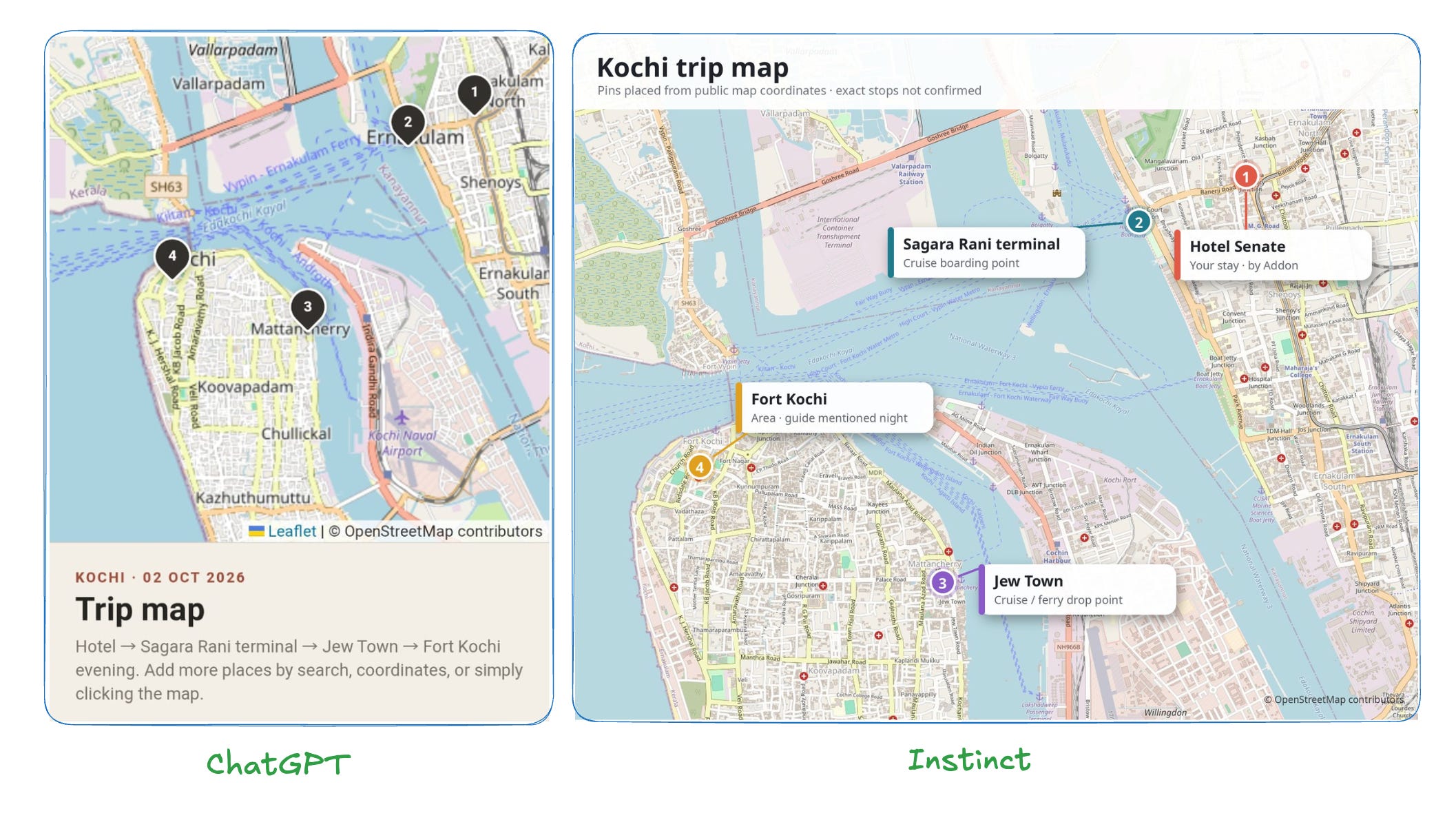
Instinct can now join your group chats to plan trips, split tickets, and run your fantasy league. Your friends don’t need to be on Instinct.
“I was travelling over the weekend with a group of strangers. Sadly our guide was too confused to decide which spots to visit in what order. I asked both ChatGPT (not codex though) and Instinct to help with an annotated + interactive map. Instinct was much better. Maybe Codex/Claude Code would’ve done a better job but it was hard to reach for them while travelling without a laptop.” — Keshav
A video editor with the same timeline for you & your agent.
clef - fast, open-source decision models like Jev from Cloudflare.
Graphical - design a visual language for your app, then hand it to your coding agent. This is a much better tool for finding visual styles than the design-words tool I built. Insta-buy.